

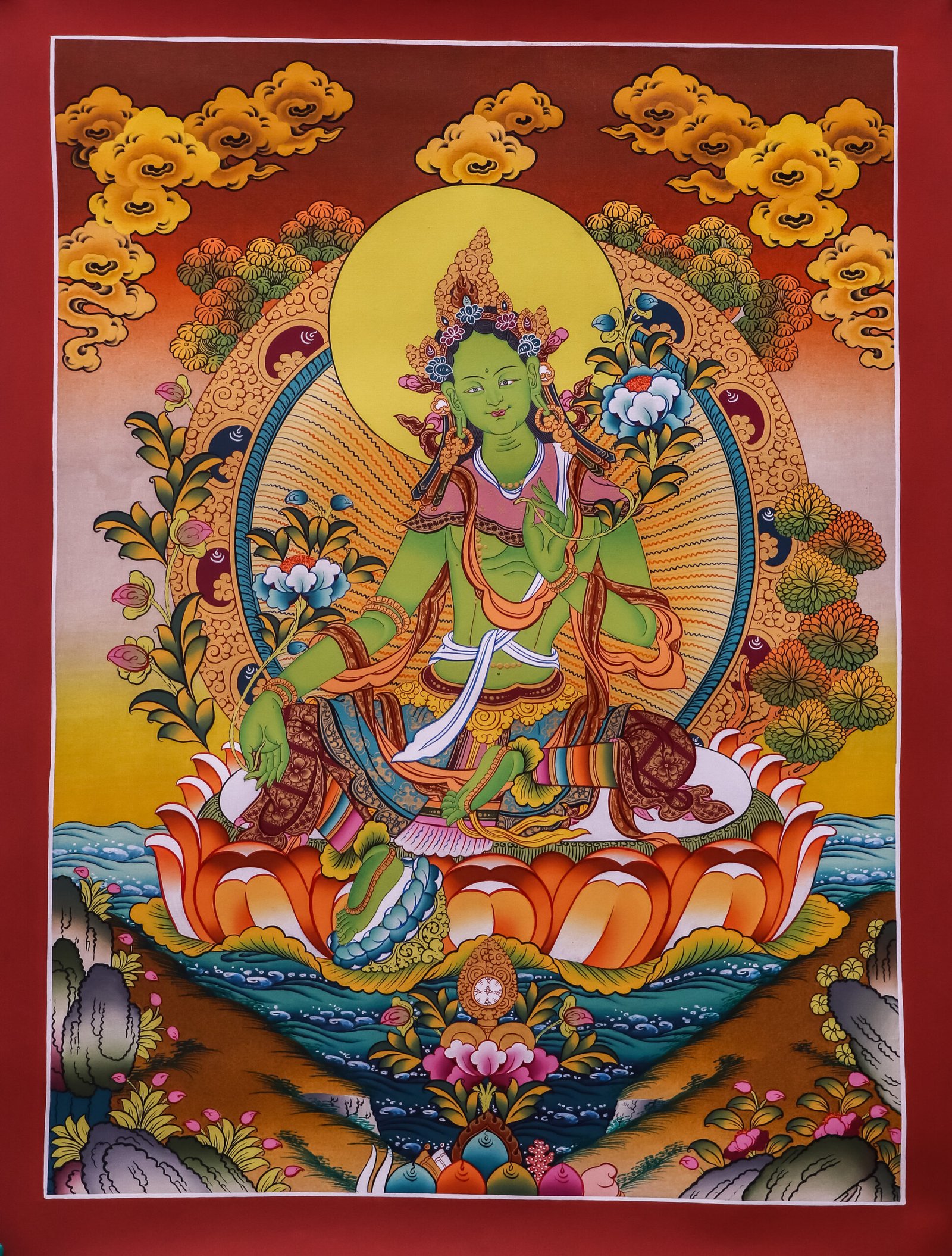
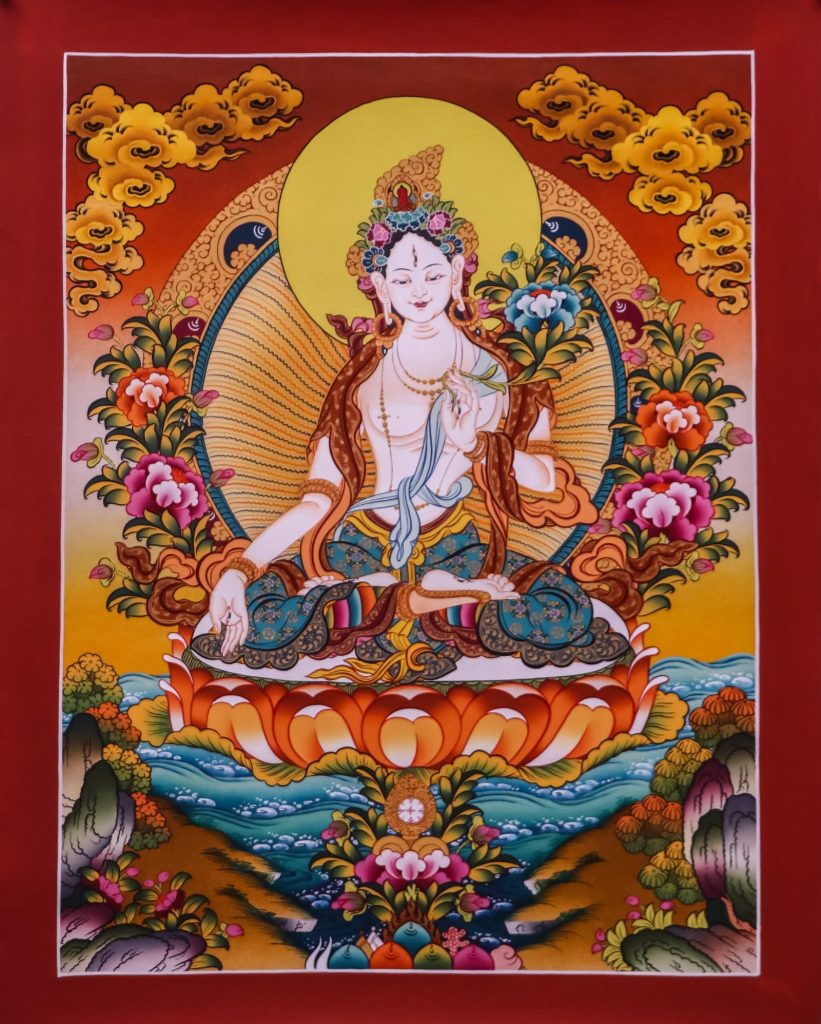
Tara is one of the most beloved figures in Tibetan and Newari Buddhism, often called the mother of all Buddhas. She appears in many forms, but two are especially popular in thangka painting: Green Tara and White Tara. They share the same compassionate heart, yet each has its own character.
Green Tara: compassion in action
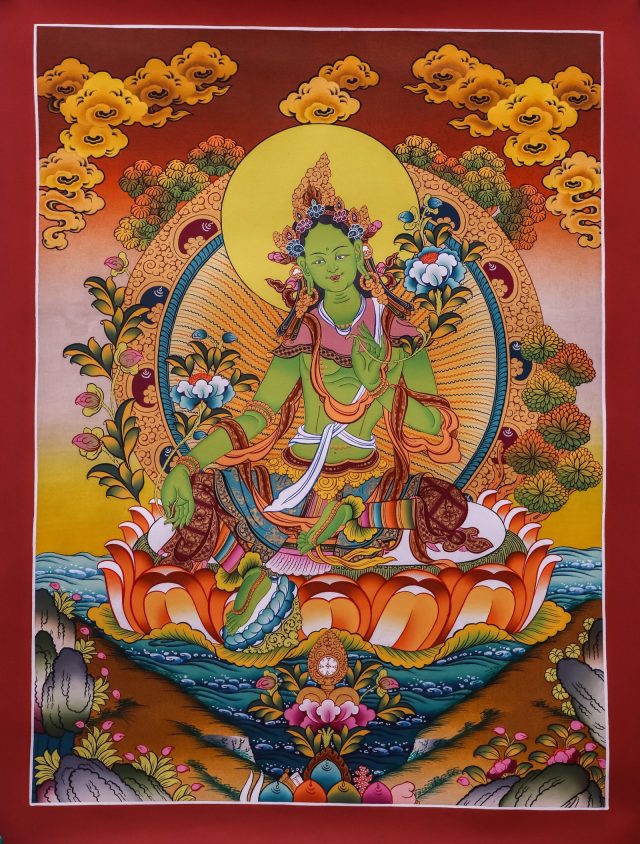
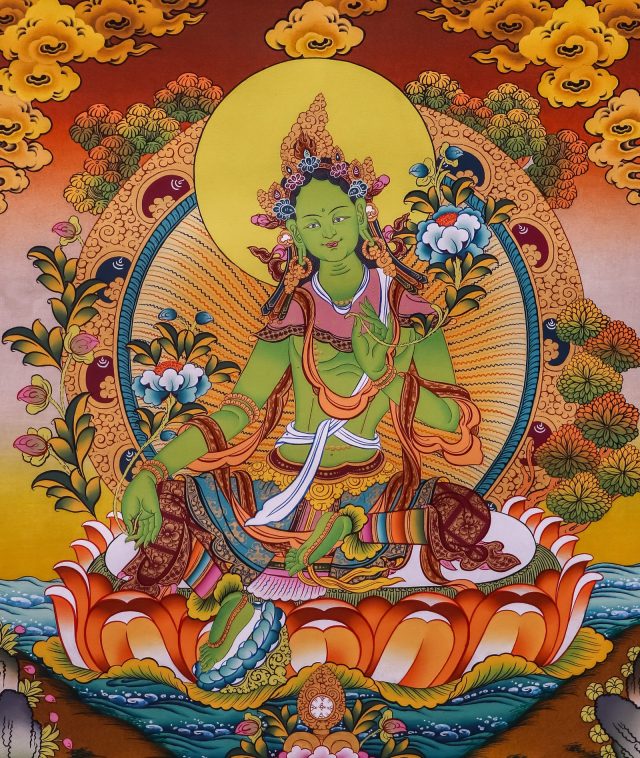
Green Tara is known for swift help and protection. She is traditionally shown seated with her left leg drawn up in meditation and her right leg extended, ready to step down from her lotus throne to help anyone who calls on her. Her right hand makes the gesture of giving, and both hands hold the stems of blue lotus flowers. People often choose Green Tara for courage, protection when travelling and help in overcoming fear.
White Tara: long life and healing
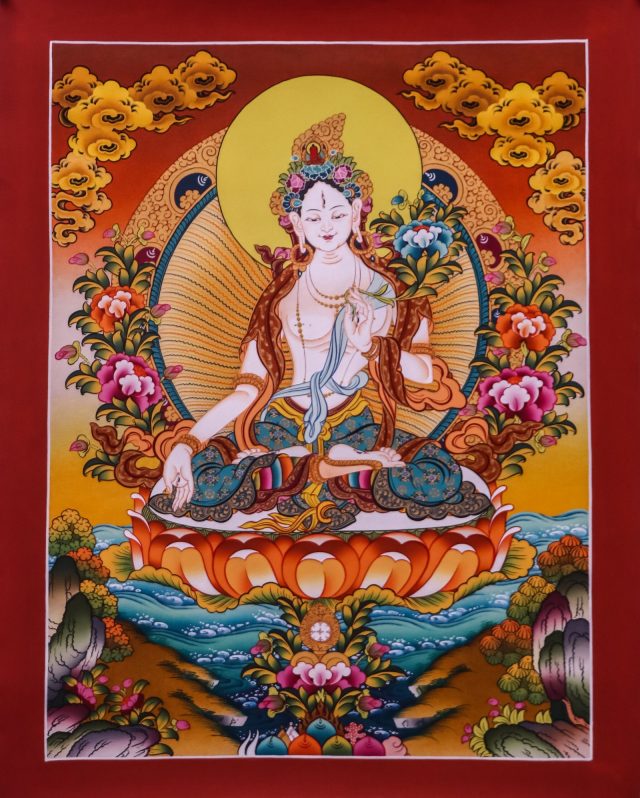
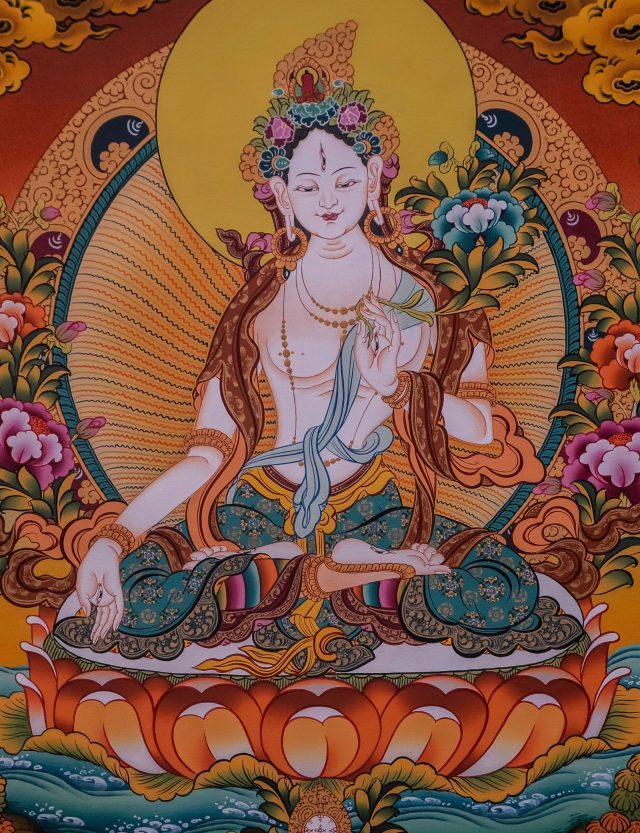
White Tara sits in full meditation posture with both legs crossed, a sign of stillness and serenity. She is recognisable by her seven eyes: one on her forehead and one on each palm and sole, symbolising her ability to see all suffering. She is associated with long life, health and peace, which is why a White Tara thangka is a popular gift for a new home, a birthday or someone recovering from illness.
How to tell them apart at a glance
- Colour: green body for Green Tara, white body for White Tara.
- Posture: one foot stepping down for Green Tara; both legs crossed for White Tara.
- Eyes: White Tara has extra eyes on her forehead, hands and feet.
Which one should you choose?
There is no wrong answer. Many homes and meditation rooms have both. If you want energy, protection and encouragement, Green Tara is a wonderful companion. If you want calm, healing and blessings for a long life, choose White Tara. Browse our Bodhisattvas and Deities collection to see both in detail.
Comments
No comments yet. Share your thoughts or ask a question about this article.