
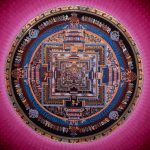


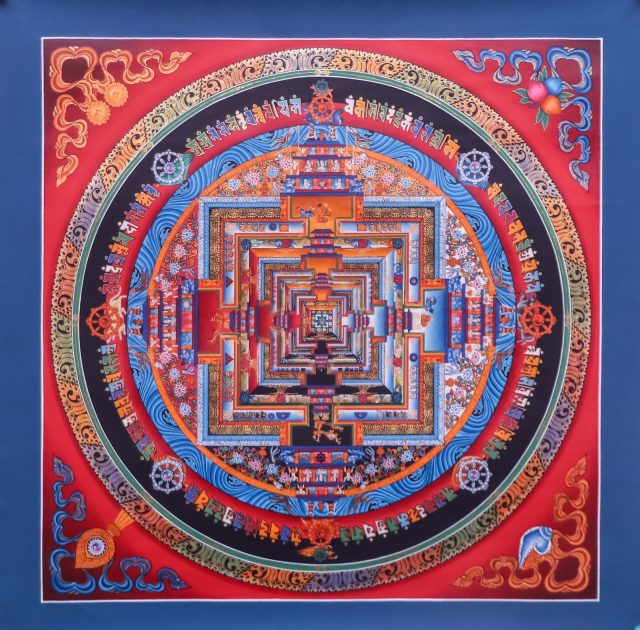
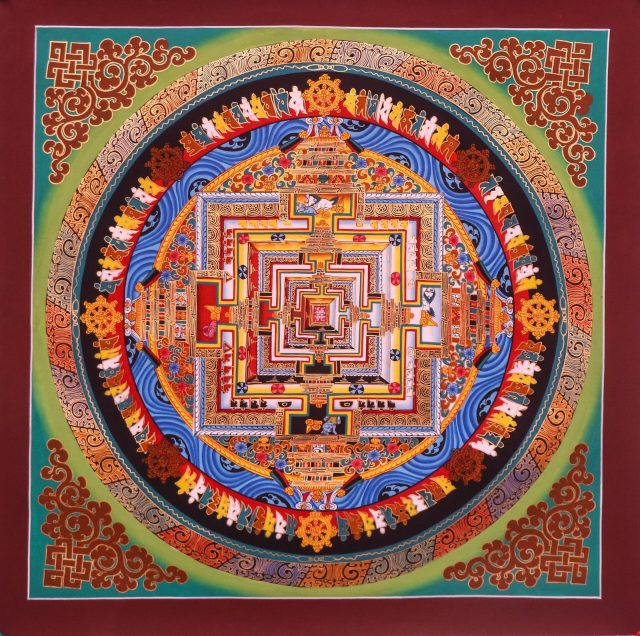
The Kalachakra mandala is one of the most intricate images in Himalayan art. Its name means the Wheel of Time, and it represents a whole universe in perfect order: the outer world, the human body and the awakened mind, all connected.
A palace seen from above
A mandala is best understood as the floor plan of a sacred palace, viewed from directly above. At the centre sits the deity Kalachakra. Around the centre are square walls, one inside another, each with four gateways facing the four directions. The gateways are decorated with arches, parasols and auspicious symbols.
The outer rings
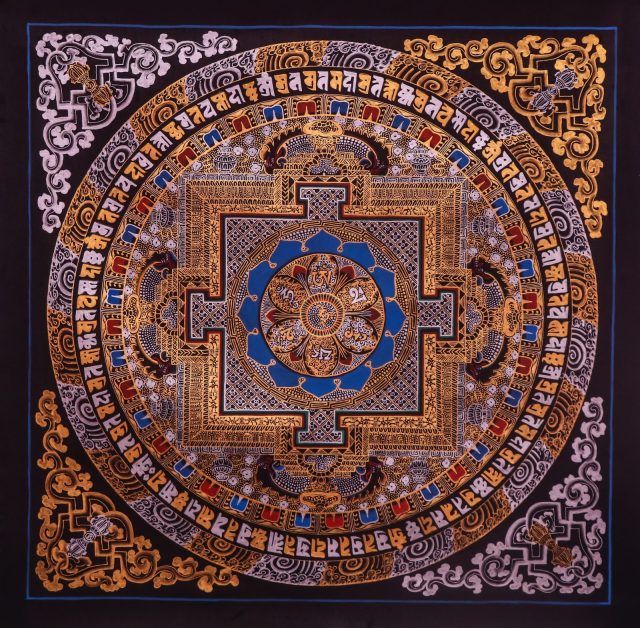
Surrounding the palace are protective circles. In many Kalachakra thangkas you will see a ring of flames that burns away ignorance, a ring of vajras that stands for indestructible wisdom, and a ring of lotus petals that stands for purity. Beyond them, sky, clouds and sometimes mantra syllables fill the corners.
Colour and direction
The four quarters of the palace are painted in different colours, commonly blue, red, yellow and white or green, linking each direction with an element and a quality of the mind. The balance between them is part of what makes a mandala so calming to look at.
Why people hang a Kalachakra mandala
For practitioners, the mandala supports visualisation and meditation. For many others, it is simply a deeply peaceful image that brings a sense of order and harmony into a room. Its symmetry draws the eye to the centre, which is why it is so often chosen for meditation rooms, yoga studios and quiet corners of the home.
Recognising a well-painted mandala
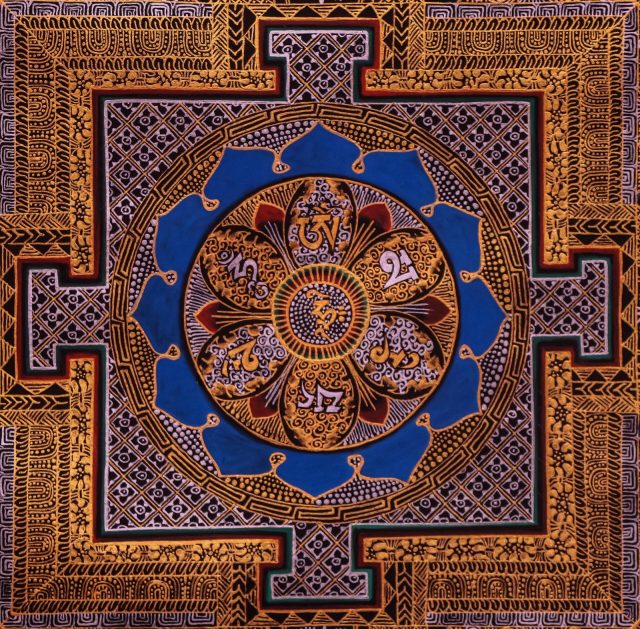
Look for straight, even lines, symmetrical gateways, fine detail in the smallest rings and clean, bright colours. Where gold is used, it should be applied evenly and burnished so it glows. You can compare several Kalachakra mandalas side by side in our Mandalas collection.

Comments
No comments yet. Share your thoughts or ask a question about this article.